Eight Hours Don’t Make a Day
- Suzana KrevhMarion
- Vesna PernarčičLuise
- Tesa LitvanMonika
- Živa SelanIrmgard
- Käthe, Waitress
- Blaž SetnikarJochen
- Bojan NavojecZoran, Customer
- Franz, Park keeper
- Rolf, Peter – Marion's boyfriend
- Aljoša TernovšekManfred, Priest, Dr. Bertram
- Rüdiger, Harald
- Head of production unit, Wolf
- Borut VeselkoKretschmer, Gregor
- Jürgen, Manni
- Dramaturgy and adaptation: Milan Ramšak Marković
- Set design and video: Igor Vasiljev
- Costume design: Belinda Radulović
- Music: Drago Ivanuša
- Lighting design: Aleksandar Čavlek
- Make-up artist: Matej Pajntar
- Language consultant: Mateja Dermelj
- Assistant director: Maruša Sirc
- Assistant dramaturg: Brina Jenček
- Stage manager: Dominik Vodopivec (PGK), Liam Hlede/Urša Červ (SMG)
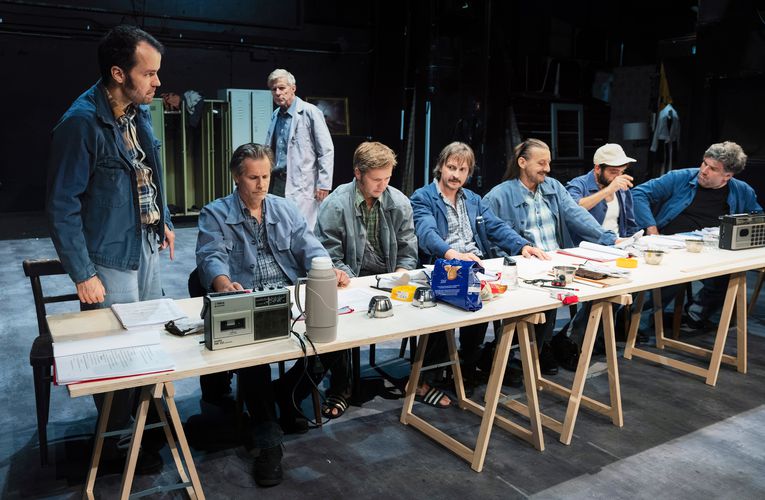
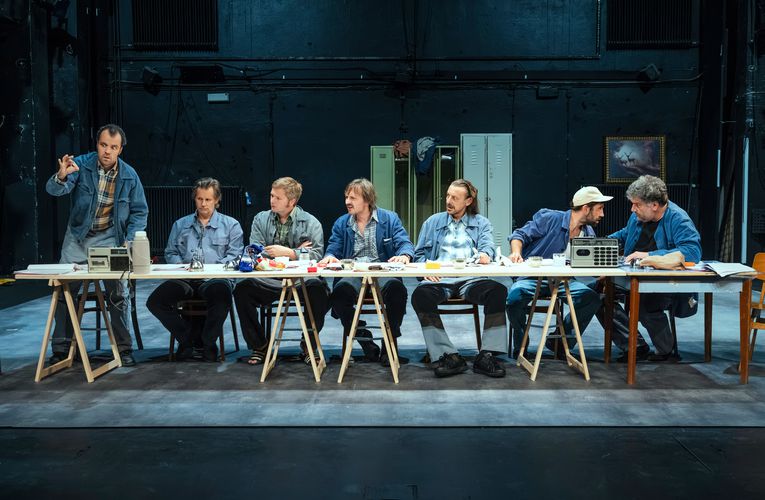
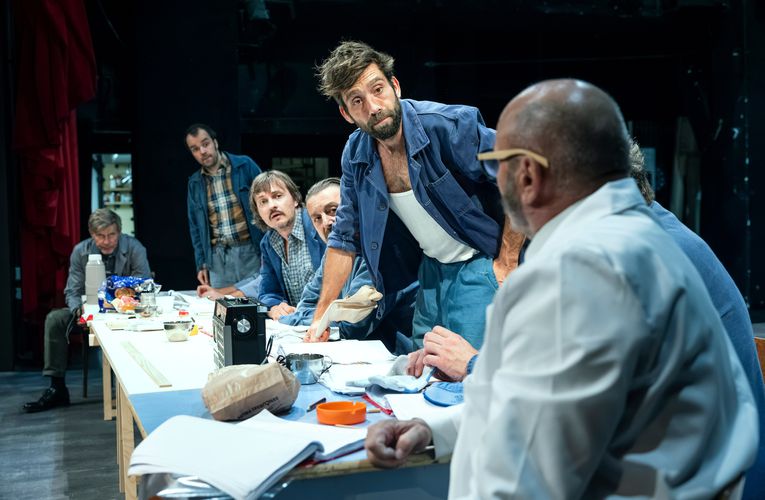
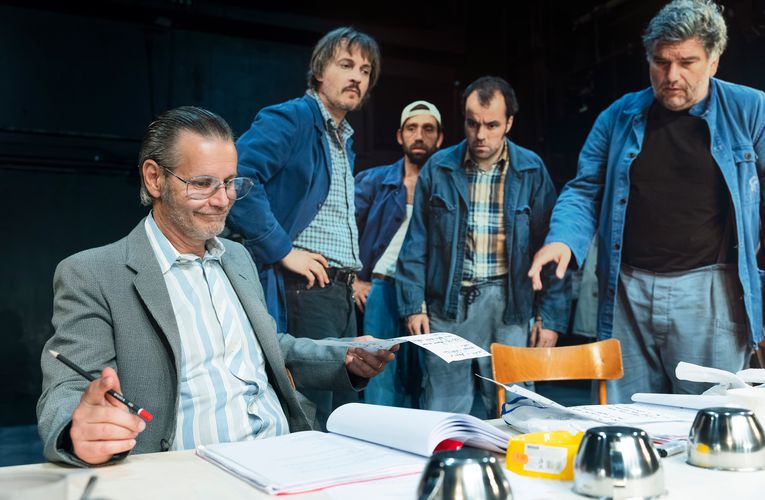
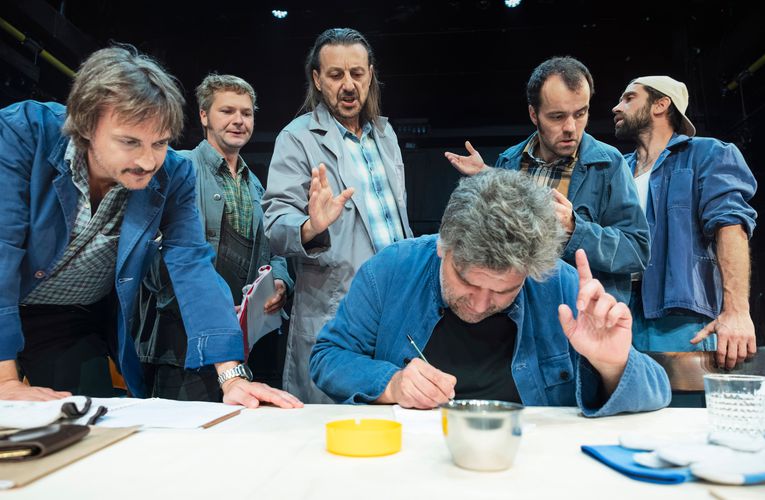
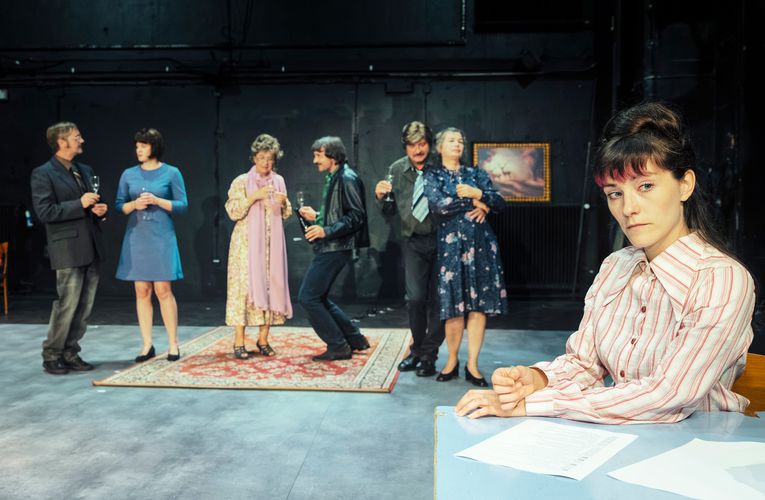
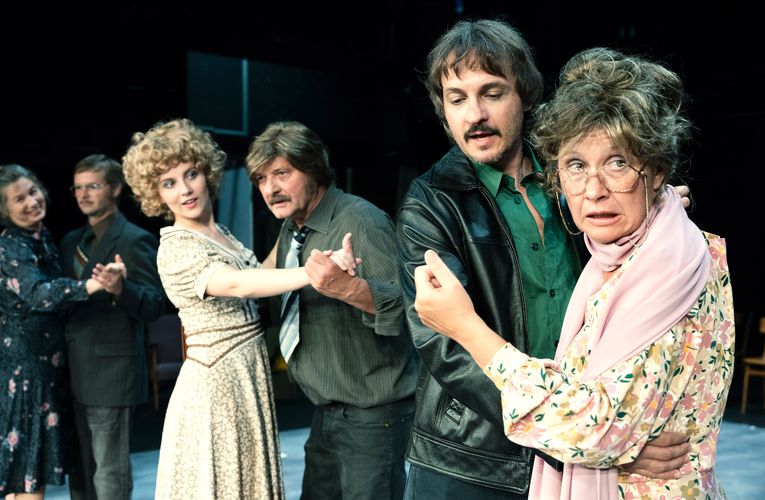
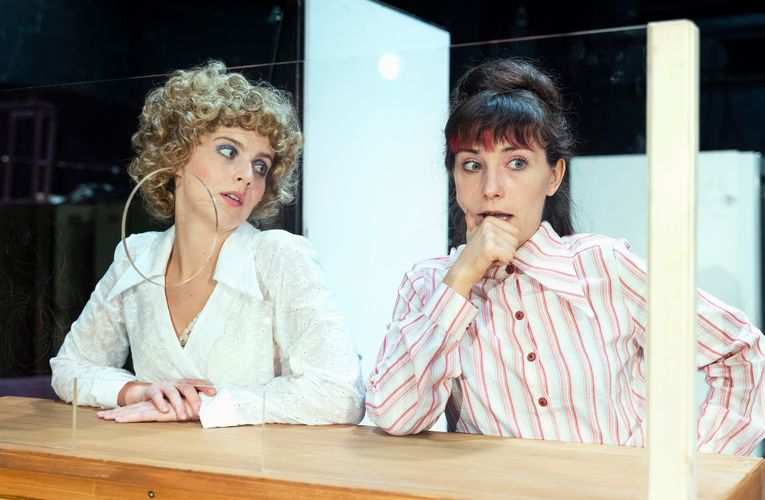
The production is based on Milan Ramšak Marković’s adaptation of Eight Hours Don’t Make a Day (Acht Stunden sind kein Tag), the early 1970’s TV series by Rainer Werner Fassbinder. The script follows the everyday life of a working-class family and a love story, but also work and events in a factory that manufactures machine tools. The production consists of two parts engaged in a silent war: the “family” part, taking place at home, and the “factory” part, where the intimate flows into the production process. Despite high ratings, only five of the planned eight parts of the series were ever filmed. The producer cited the script being too far removed from reality and incorrect in its depiction of the unions as one of the reasons for the cancellation.
Fassbinder’s series relies on premises completely different from those that were customary earlier, or those that we have learnt to expect from him: in it, simple, lovely people change the world around themselves with ease. There are no outcasts among them, no political and sexual deviations and extremes, no blood, nudity, no daring twists, genre tears and brutal ideological slaps. But from behind it all, a misty, barely perceptible horizon of the anarchist background shines, which flows into the spectator through the invisible pores that we only become aware of later … When we stop watching and immersing.