A Manifesto
- Željko Hrs
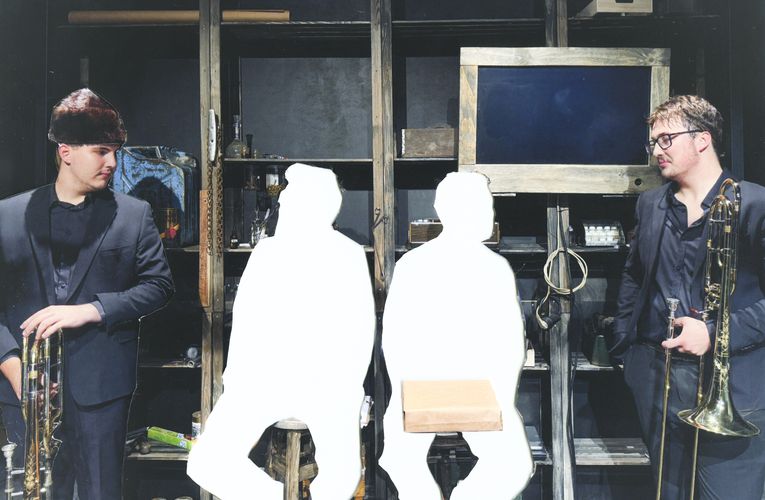
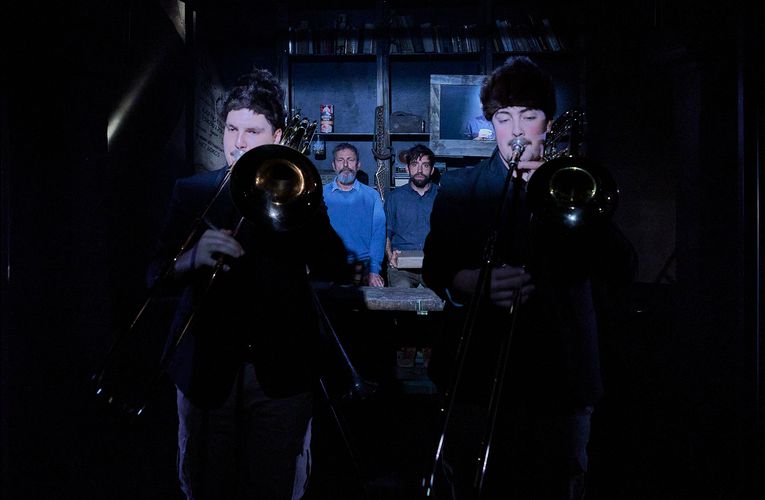
- Lenart Maček, Črt PačnikTrombones
- Text and dramaturgy: Boštjan Narat
- Set design: Damir Leventić
- Costume design: Dajana Ljubičić
- Lighting design: David Orešič
- Video: Pila Rusjan v sodelovanju z Bedrock Media
- Language consultant: Mateja Dermelj
- Production management: Barbara Zonta
- Stage manager: Liam Hlede
In september 1995, The Washington Post ran a piece titled Industrial Society and Its Future, a manifesto, signed F. C. – Freedom Club. As it soon turned out, this freedom club was an individual, Ted Kaczynski, for a decade and a half prior known to the United States of America, and a large part of the world, under his code name Unabomber. In different circumstances, the Manifesto would have been read by a couple of dozen readers, but the notoriety of its author, to this day the best-known American terrorist, provided it with a cult status practically overnight. But was the author’s controversy really the only reason for the text to be interesting? Even reading it decades later, the ideas of the murderous bombing nut seem anything but crazy. Cosmetic reforms cannot keep up with the unbridled progress of technology and the consequences that this development has on the human animal, so all of this requires us to rethink deeply the foundations of our social reality. And not just rethink, but act, too. Is it true that only bombs can wake us up? The response of the mathematical genius, murderer, visionary, criminal, amateur trombone player and tactics master is clear. The forest man called Ted has said it all. What can we add to it?
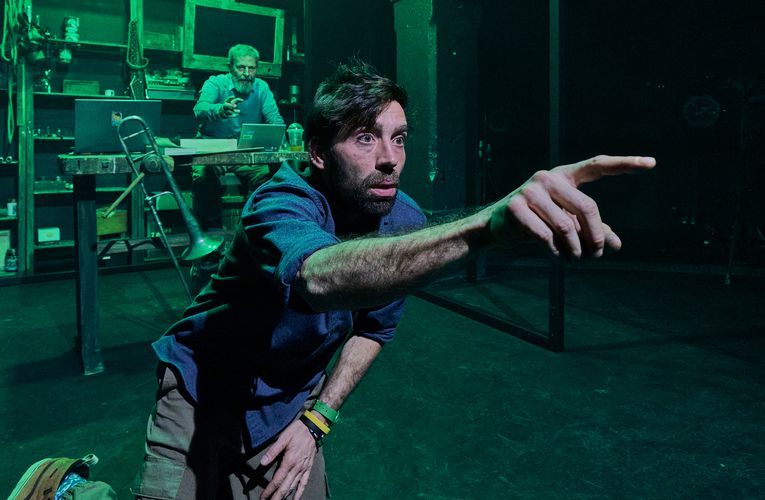
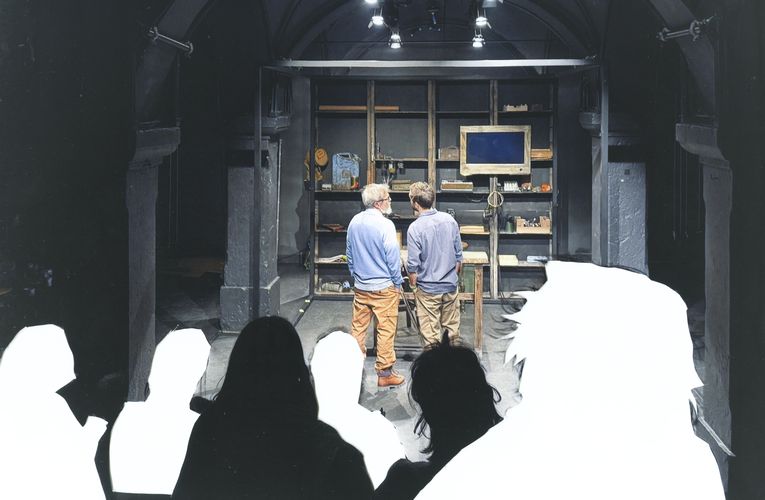
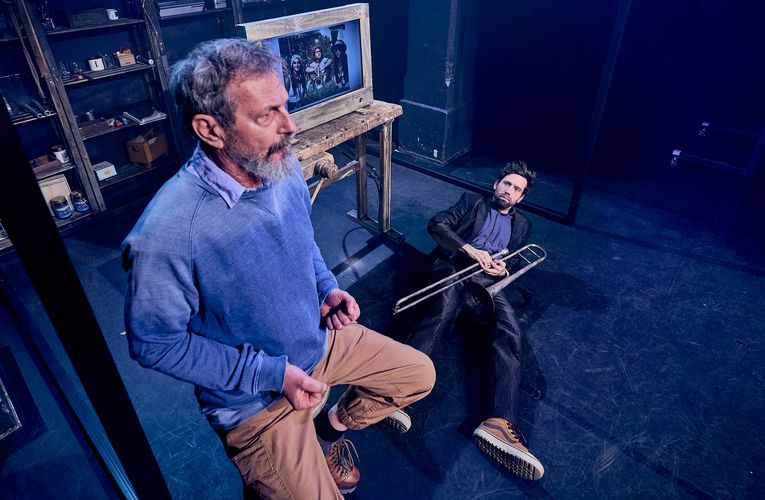
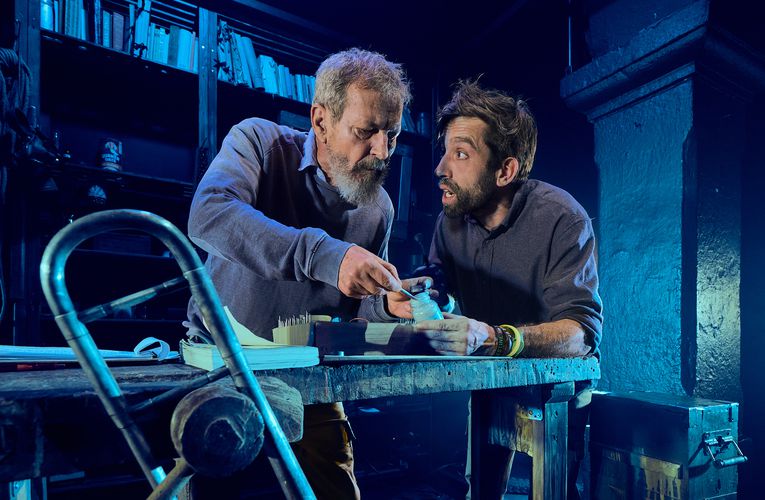
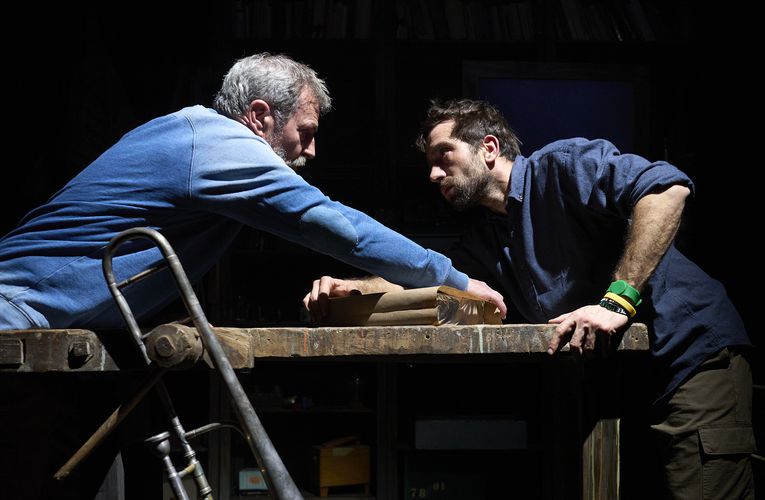
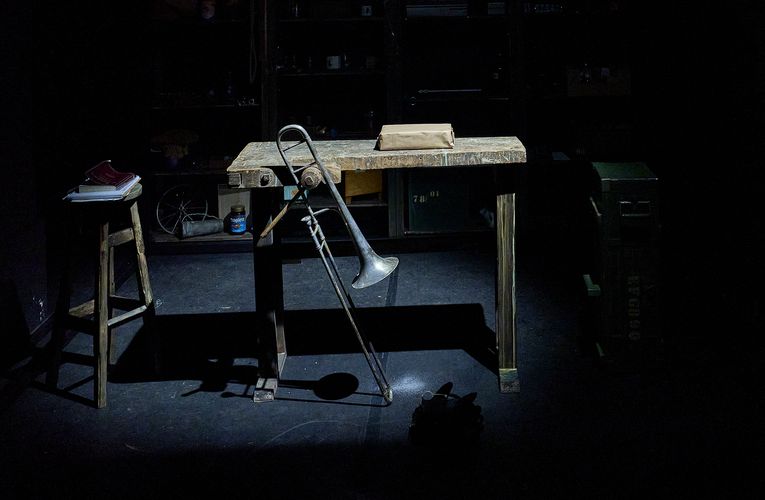
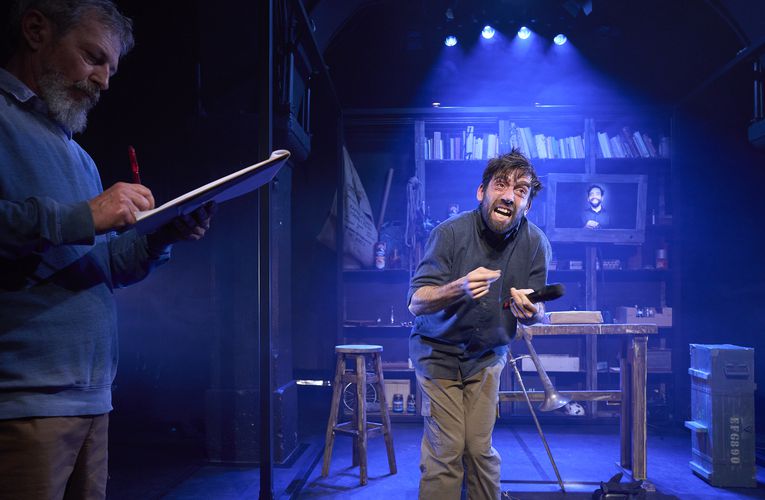
The production immediately leaps into the environment of its protagonist, with the set by Damir Leventič, which creates a realistic reconstruction of the interior of Kaczynski’s cottage, a relatively abandoned place with different objects intended to build bombs. With every object they use, the attention moves to other similar objects in the room, and with this, into the historical context and precise details of scenographic setup, which tells enough about the protagonist’s life so that the creative team didn’t need to deal with biographical data but can focus on philosophy and thought. The actors shift from role to role, with one of them taking the role of Kaczynski in key moments, only to soon shift back to playing the role of himself, the journalist, a friend … The decision for the role of the protagonist to be split between both actors further allows the production to avoid a documentarist presentation of a life, which is today fully blurred with pop fascination, and focus on his manifesto, ideas, and actions. Kaczynski thus becomes merely a starting point to rethink today’s society, rather than the central figure of the play, although it is its foundation and building block. It is a successful code of thinking that avoids mere reinterpretation of the known facts, but prefers to turn them into the present and enriches them with their own options, social situations and general context.
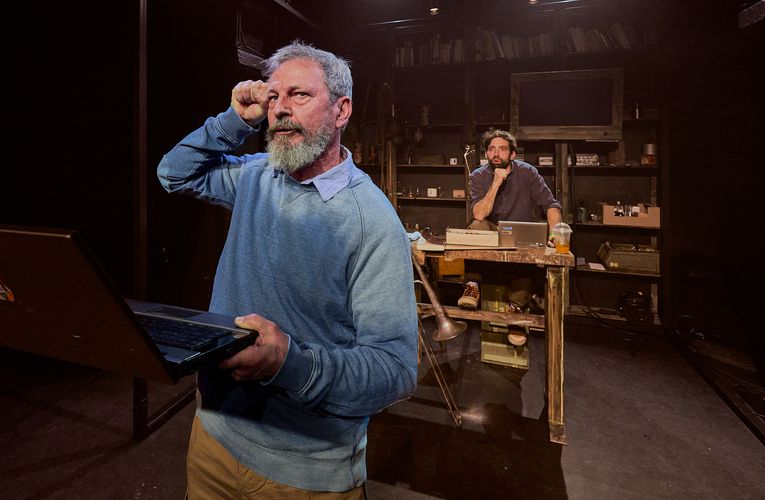
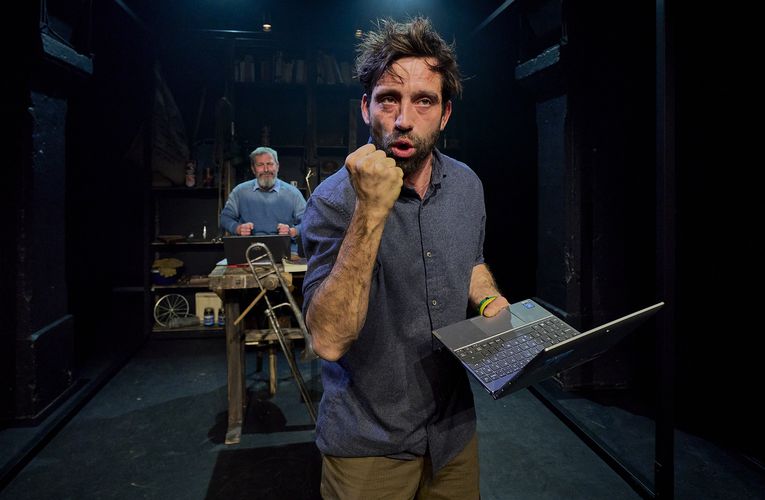
A Manifesto plays with time, questions the notion of truth, in a socio-political context, but also in the context of theatre and technology. The production uses the philosophical dilemmas about truth and fiction that the audience knows well, for example, a true physical presence of a person in a space, or their presence in a photo or on a television screen. […] But thematising the relationship between the real and the fictional remains in well-known stories, for example, changing historical reality by manipulating photos with photomontage or censorship, as was the case in the Soviet Union, where problematic political personalities were erased from photos. Photomontages and manipulations of photos and videos are even more frequent nowadays, and the creators of the production merely touch upon the phenomenon of fake news. The creators of the production made the role of artificial intelligence a part of dramaturgy, as the actors play out scenes based on prompts that they fed into ChatGpt and Deepseek, thus also touching upon the question of originality and human creativity. […] The scene appears like a dream, just like a human in dreams generates beings, technology also creates dematerialised human images into which humans can dive, and at the same time, this makes us ask, what is even true. And what does the death of a human actually mean if the person can live on in the world of virtual reality? The production leads us to rethinking the relationships between the real, fictional and virtual, and it seems that these themes are best addressed by the language of theatre.
The performance is a small-form production. In contrast to the radical text that inspired it, the theatrical form remains relatively traditional and minimalist. Its greatest value lies in the text itself and the process of its creation, along with numerous references to other authors such as Dostoevsky and Kundera. The dramatic text was created mainly on the basis of the manifesto itself and other writings by Kaczynski concerning his life. An interesting dramaturgical device is the inclusion of AI in the work on the play, whose lines appear in one of the most intriguing scenes of the performance. [...] The most interesting moment of A Manifesto is the scene in which Željko and Vito are tasked with writing a monologue about freedom and decide to create it with the help of artificial intelligence, one using ChatGPT, the other using DeepSeek. The result turns out to be comical. The AI generates pompous, overly emotional, traditionally structured monologues that would hardly win the approval of contemporary dramaturgical critics. The actors perform them just as humorously, emphasizing the artificiality and awkwardness of the generated texts. This scene can be contrasted with an earlier dialogue in which Vito admits he is afraid of being replaced by technology. Yet the monologues created by AI show that such a scenario seems rather unlikely. It is also worth noting that the very idea of theatre collaborating with machines is nothing new. As early as the Italian futurists, Prampolini and others dreamed of theatrical experiments with automation.